


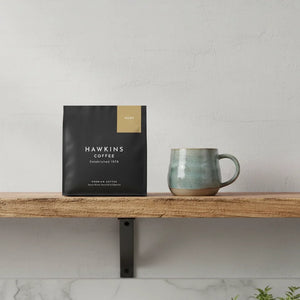




If you've looked at a coffee menu recently, you've probably seen the words "single origin" and wondered whether you should care. The short answer: it depends what you're after. Neither is better than the other - they're just different, and they suit different situations.
What's a blend?
A blend is a mix of coffees from different origins, combined to create a specific flavour profile. Roasters blend coffees to achieve balance, consistency, and a well-rounded taste that works across different brewing methods and with milk.
Most of the coffee served in cafes is a blend. There's a good reason for that: blends are designed to taste the same every time. When a seasonal component changes (because harvests are seasonal), the roaster can adjust the recipe to maintain the same flavour. That consistency is important when your customers expect their flat white to taste the same on Monday as it did on Friday.
Our Milan, Continental Blend, and Breakfast Blend are all examples. Each one is designed for a specific purpose - Milan for espresso and milk drinks, Breakfast Blend for filter, Continental for those who like something a bit bolder.
What's a single origin?
A single origin coffee comes from one country, region, or sometimes a specific farm. It hasn't been blended with anything else, so what you taste is entirely the character of that particular coffee.
Single origins tend to have more distinct flavour characteristics. A Colombian coffee might taste different from a Kenyan, which tastes different from a Brazilian. These differences come from the growing conditions - altitude, soil, climate, processing method - and they give each origin its own personality.
Our Colombia, Kenya AA, Kenya Peaberry, Brazil Mogiana, Costa Rica, and Java are all single origins. Each one has its own character.
Which one should you choose?
If you want something reliable and well-rounded - go for a blend. Especially if you drink your coffee with milk, a blend is usually the safer bet. They're designed for balance, and they perform consistently.
If you want to explore and taste something more distinctive - try a single origin. They can be more interesting black, and they're a good way to discover what kinds of flavours you enjoy. Some are fruity, some are chocolatey, some are clean and bright.
If you run a cafe - use a blend as your house espresso (that's what most people will order) and offer a single origin as a filter or guest espresso for customers who want to try something different. This gives you the best of both worlds: consistency for the majority, something interesting for the curious.
If you're brewing at home - try both. Our Taster Box is a good way to compare side by side. You might find you prefer a blend for your morning coffee and a single origin for the weekend when you've got time to appreciate it.
Does single origin mean better?
No. This is a common misconception. Single origin means traceable and distinctive - not automatically superior. A well-crafted blend from a good roaster using quality beans can be just as good (or better) than a mediocre single origin. It's about the quality of the coffee and the skill of the roaster, not the label.
We use Grade 1 Arabica beans in everything - blends and single origins alike. The quality bar is the same.
Not sure where to start? Give us a call or try the Coffee Finder on our website. We'll help you pick something based on how you actually drink your coffee - not based on what sounds impressive on a menu.